

Positive-charge polyacrylamide
Cationic PAM
Match charge density and molecular range to the sludge, then prove drainage, capture, cake and dose on the actual dewatering machine.
Selection thesis
The machine does not buy a charge label. It needs a stable conditioned feed.
Cationic PAM is widely screened for biological and organic sludge because positive charge and polymer bridging can create drainable floc. The final product must still be chosen from representative testing, preparation control and equipment evidence.
Product recommendations, samples and export supply are provided by Gongyi Xinqi Polymer Co., Ltd.
Product range
Three charge-density starting points.
Compare all grades →Low-Charge Cationic PAM
Screen low-charge cationic PAM for lower cationic-demand sludge and mixed feeds using equal-active-dose trials, filtrate quality and equipment evidence.
02Broad screening rangeMedium-Charge Cationic PAM
Evaluate medium-charge cationic PAM as a broad sludge-dewatering screen for municipal and industrial biological solids across presses and centrifuges.
03High-demand feed screenHigh-Charge Cationic PAM
Test high-charge cationic PAM for high-demand biological and digested sludge while controlling active dose, overdose, shear and return-liquor quality.
Equipment proof
Read the separator before changing polymer.
Use machine-specific endpoints rather than visual floc alone.
Open equipment selection →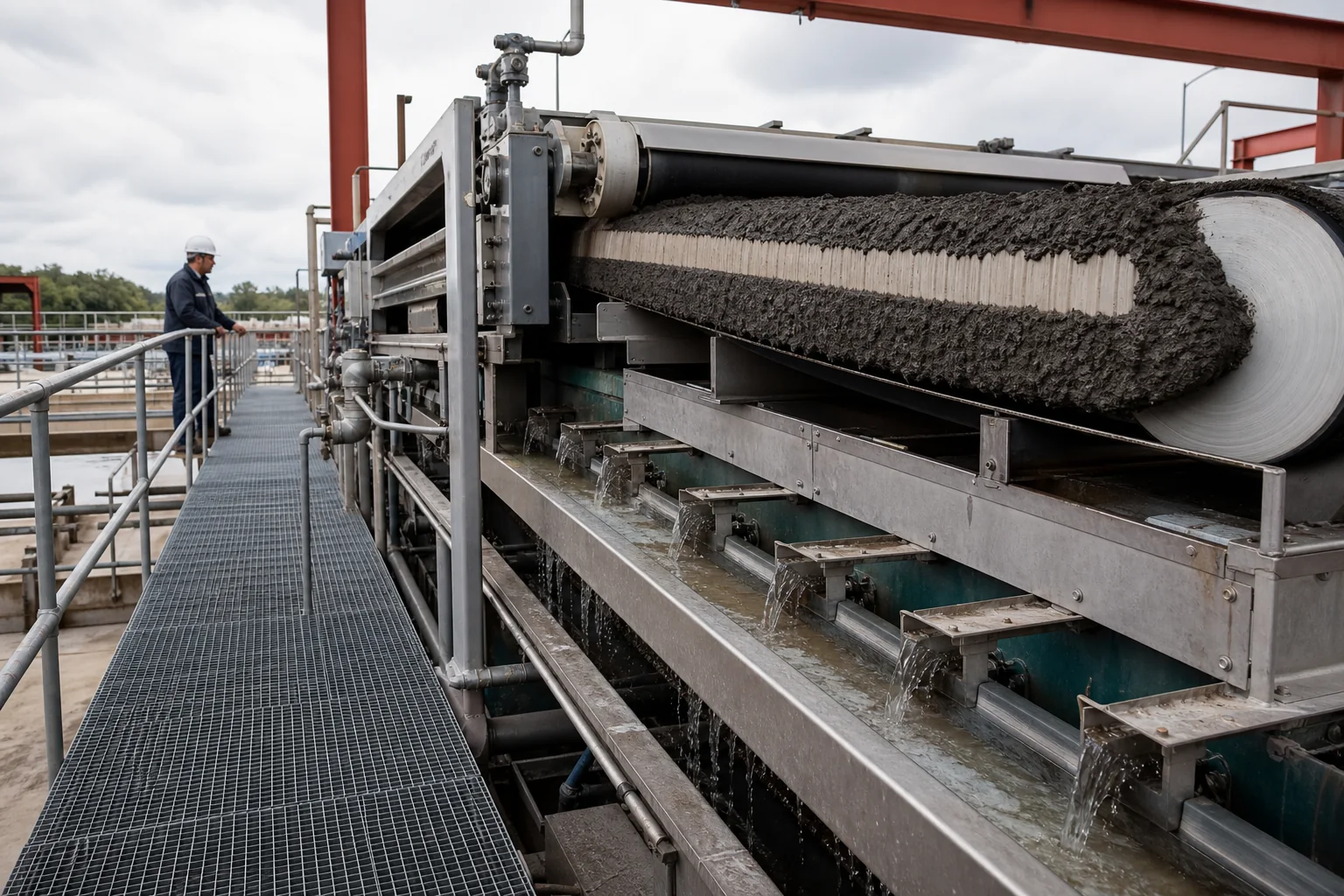
Feed evidence
Biological sludge is not one fixed material.
Primary/secondary ratio, digestion, ash, upstream coagulants, pH and industrial load change cationic demand and water release.
Technical articles
Operating decisions, filed by symptom and task.
View all 8 articles →Grade review
Send sludge data before samples travel.
Include feed solids, pH or conductivity, upstream chemicals, current active dose, machine, target, quantity and destination.