
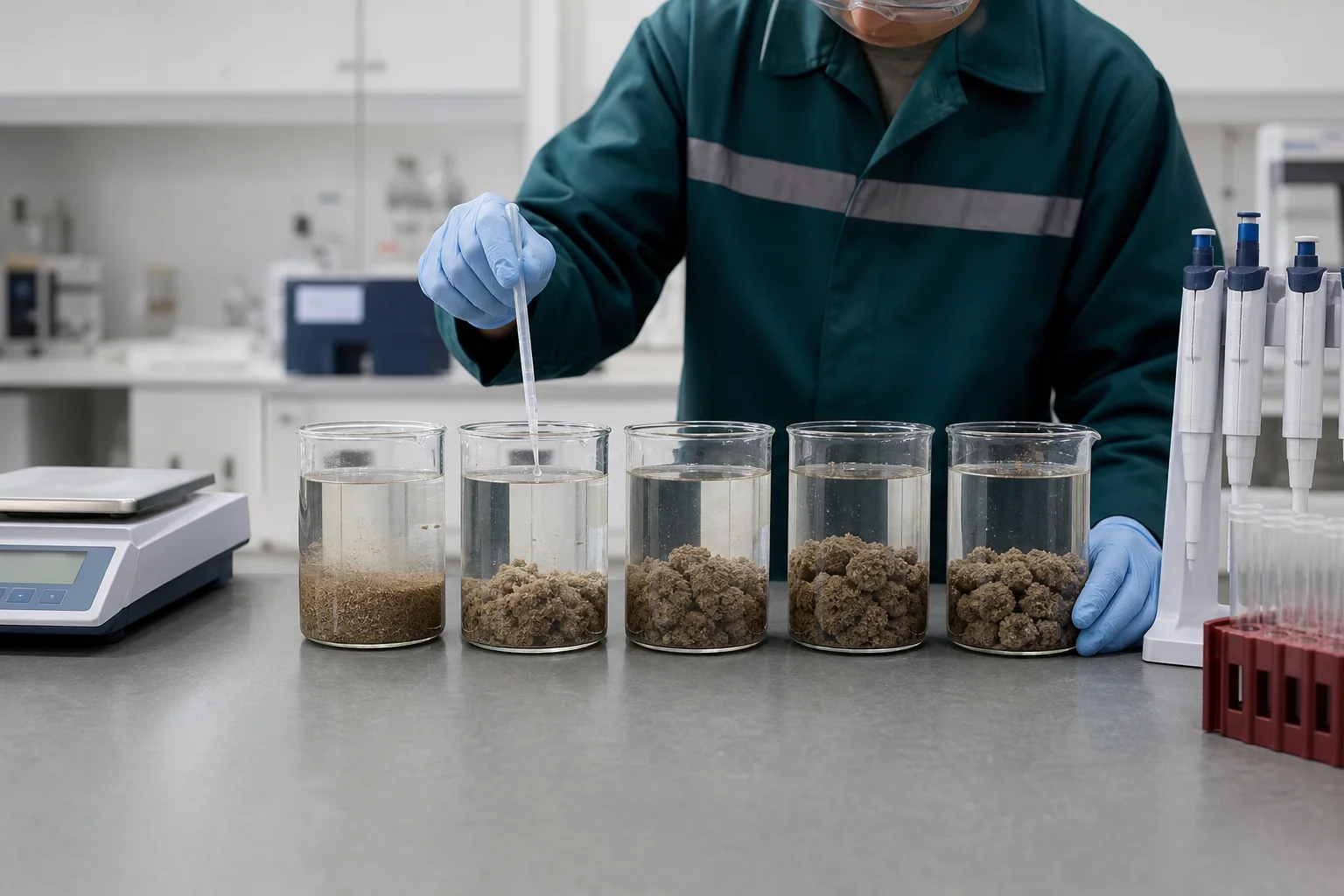
A blend of primary sludge and waste activated sludge is not a fixed product. The proportion can change the conditioning response and dewatering behaviour. Buying cationic PAM against one favourable blend may create unstable operation when the normal mix shifts.
Describe the blend as a range
Record how primary and WAS streams are combined and which ratios occur during normal service. Add total feed solids and upstream chemicals. A wet-volume ratio may not equal the dry-solids contribution if the streams have different concentrations. State the measurement basis instead of presenting one ambiguous percentage. Ask operations which condition is difficult and include it in the trial plan before a supplier selects candidates.
Separate charge response from preparation differences
Test adjacent charge ranges with controlled preparation and active-dose normalization. Use the same blended sample for paired comparisons. If each candidate is tested on a different daily feed, apparent product advantages may reflect the sludge rather than the polymer. The charge-density screen provides the foundation, while the dry-ton dose guide keeps concentration changes visible.
Test a robust operating window
Compare capture, separated-liquid quality, cake condition and throughput at meaningful blend limits. Decide whether one candidate can tolerate the normal variation or whether controlled alternatives are justified. Do not create an uncontrolled practice of changing grades whenever the appearance of the sludge changes. If two grades are approved, identify the trigger, preparation and stock controls for switching and ensure operators can distinguish them.
Translate blend variability into purchasing
Estimate consumption from the expected solids loading and observed dose range rather than one low-dose trial. Keep forecast uncertainty explicit. Request product identity and packaging that support traceable stock management. Where a supplier proposes a change, require the replacement to cover the relevant blend range. A broad label such as “municipal sludge PAM” is not sufficient evidence that future deliveries will preserve the tested response.
Evidence needed before purchase
Record the actual observation or document reference against each item. If a condition was not tested, keep it visible as an approval limitation. Purchasing, operations and receiving should use the same candidate identifier so a favourable result is not transferred to a different product or unreviewed delivery.
| Decision | Evidence | Release condition |
|---|---|---|
| Blend basis | Dry-solids contributions and expected range | Test mix represents the actual operating duty |
| Trial control | Same feed and comparable active dose | Grade response is distinguished from feed changes |
| Release scope | Results at relevant blend limits | Purchase approval covers stated conditions |
Information to send with the quotation request
Provide primary and WAS contributions on a stated basis, the range seen in operation, total solids, upstream coagulants and dewatering equipment. Include the incumbent grade and any recent blend-related performance changes. Identify whether one operating grade or a controlled two-grade strategy is being considered.
Include the required quantity, packaging method and destination with the technical evidence. Use the cationic PAM trial and RFQ route for a focused sample review, then confirm documents, packaging and supply scope for the approved product. Gongyi Xinqi Polymer Co., Ltd. can review the application and quotation requirements. Grade suitability, delivery availability and commercial terms need confirmation; no universal dose or guaranteed treatment outcome should be inferred from an application name.
Sample pathway
Send the feed condition and machine target.
A focused sample set starts with representative sludge, active dose, equipment and acceptance data.