
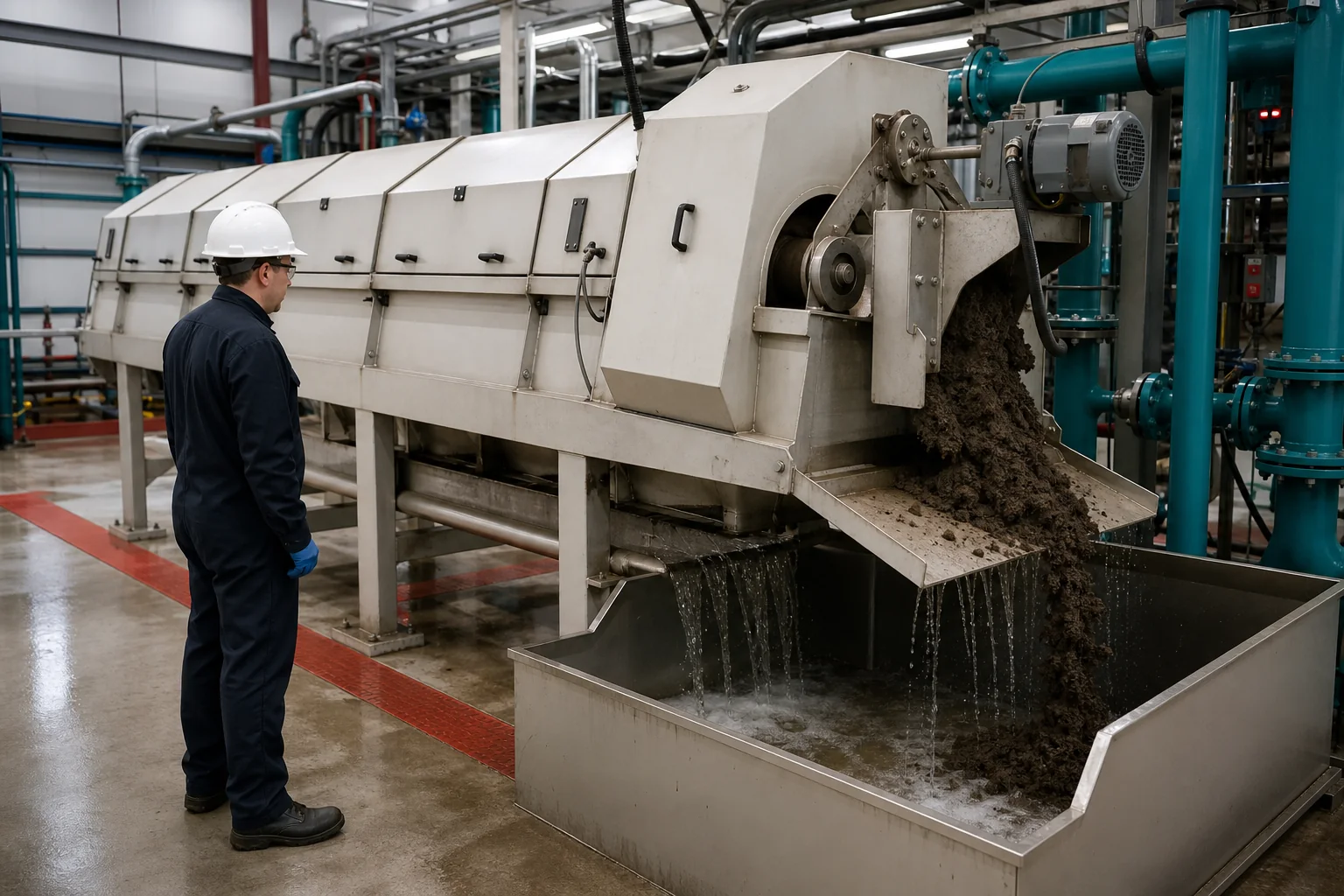
Screw presses combine flocculation, drainage and progressive compression at relatively low rotational speed. Polymer must form drainable floc without producing a sticky mass that blocks rings, raises cleaning demand or disrupts cake transport.
Inspect the drainage zone
Early filtrate clarity, free-water release and ring condition show whether the feed is conditioned before pressure rises. Persistent fines may reflect underdose, poor mixing or an unsuitable grade. Clear filtrate accompanied by sticky deposits can point toward overdose.
Coordinate polymer with press settings
Record screw speed, back pressure, feed rate, feed solids and wash cycle. Keep settings stable for grade comparisons, then optimize the chosen product with the machine. Do not assign every pressure or torque change to polymer chemistry.
Evaluate cake transport and cleaning
Measure cake solids and capture, but also note discharge consistency, buildup and cleaning time. A grade that produces marginally drier cake at the cost of frequent blockage may have a higher total operating cost.
Test with actual sludge variability
Compare representative feeds across normal operating conditions. The screw-press selection article organizes symptoms into chemistry, preparation and mechanical checks. Provide this record with the sample request so the grade range can be narrowed.