
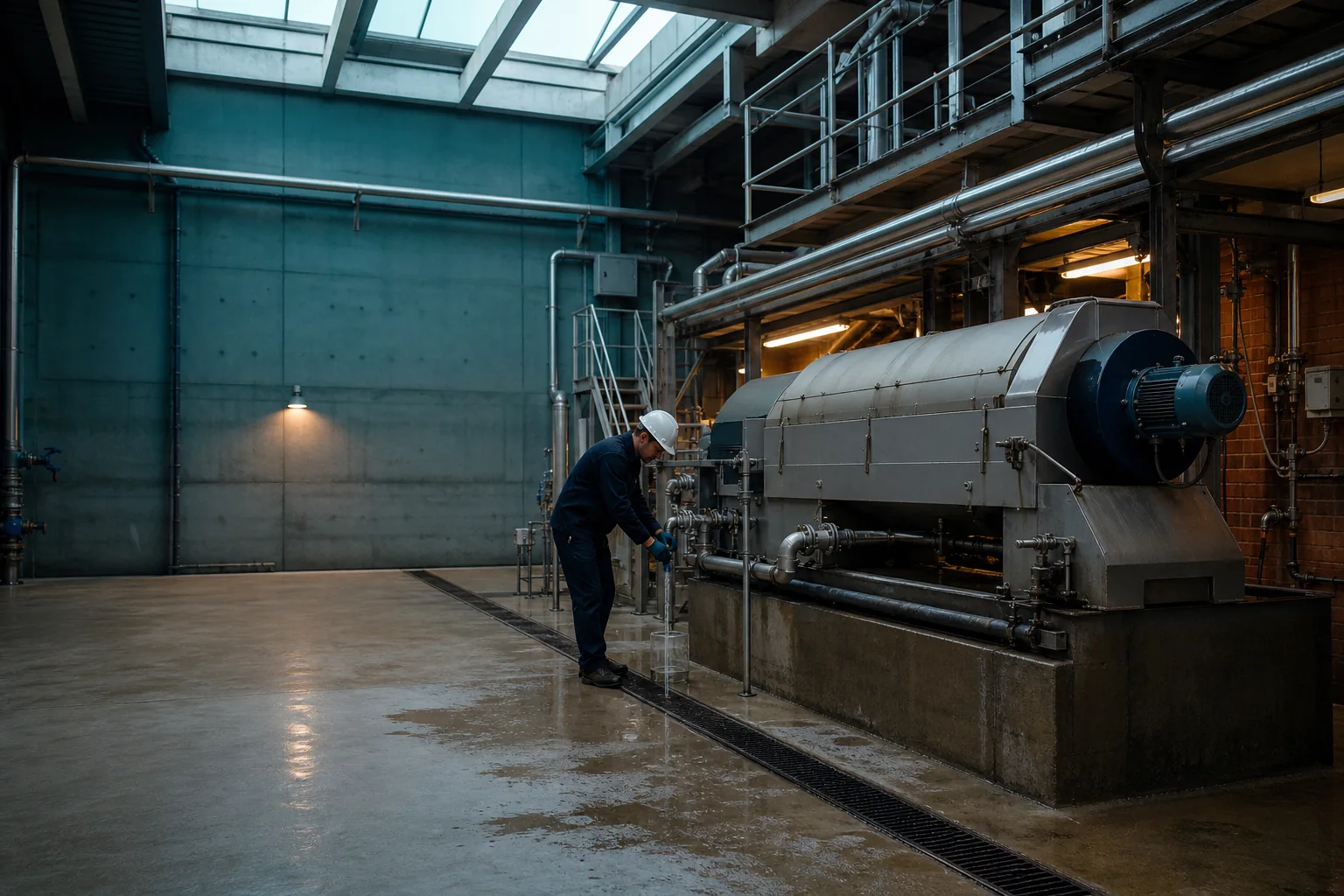
Anaerobic digestion changes the material presented to dewatering. A previously approved polymer for undigested sludge should not be assumed equivalent for digested feed. Request candidates against the actual digestion and separation duty, with acceptance criteria covering both cake and the separated liquid.
Describe digestion and subsequent feed handling
Identify the source mix, digestion process and any thickening or storage before the machine. Record solids concentration, temperature and upstream additions where relevant. Include the feed range associated with normal operation rather than selecting only an easy sample. Do not assign a fixed cationic charge percentage from the words “digested sludge.” The appropriate range depends on the actual material and must be narrowed by controlled comparison.
Compare candidates at normalized dose
Prepare the incumbent and candidates using defined conditions and measure dose per dry solids. Similar pump settings do not establish equal active dose if concentration, product form or pump delivery differs. Keep solution age and mixing documented. Use dry-solids dose normalization to interpret the comparison. A very narrow favourable point may be difficult to maintain as feed solids and loading change.
Include return liquor and machine constraints
For a centrifuge, record capture, centrate quality, cake solids and the operating settings that affect separation. For a press, use its drainage and handling endpoints. Poor return-liquor quality may increase upstream treatment burden even when the cake looks satisfactory. The decanter selection path links polymer approval with machine evidence. Do not describe conditioning as removal of every dissolved constituent released during digestion.
Preserve approval through repeat orders
Retain the tested product code, feed conditions and preparation method in the purchase record. Confirm documents and lot identity on delivery. If the digestion feed changes materially, review the candidate range instead of treating an old trial as permanent qualification. Estimate consumption from the verified dry-solids load and allow for the actual supply lead time confirmed by the supplier, without inventing a guaranteed shipment or universal monthly demand.
Evidence needed before purchase
Record the actual observation or document reference against each item. If a condition was not tested, keep it visible as an approval limitation. Purchasing, operations and receiving should use the same candidate identifier so a favourable result is not transferred to a different product or unreviewed delivery.
| Decision | Evidence | Release condition |
|---|---|---|
| Digestion duty | Source mix and post-digestion handling | Trial uses the intended feed condition |
| Dose comparison | Active dose, solids and preparation records | Incumbent and candidates are comparable |
| Whole result | Cake, capture and return-liquor quality | Acceptance does not depend on cake alone |
Information to send with the quotation request
Provide digestion type, input sludge mix, feed solids, temperature, machine settings and upstream chemicals. Include current polymer identity, solution preparation, active dose and the plant endpoints used for acceptance. Where different feed campaigns occur, identify which conditions were sampled and which still require a trial.
Include the required quantity, packaging method and destination with the technical evidence. Use the cationic PAM trial and RFQ route for a focused sample review, then confirm documents, packaging and supply scope for the approved product. Gongyi Xinqi Polymer Co., Ltd. can review the application and quotation requirements. Grade suitability, delivery availability and commercial terms need confirmation; no universal dose or guaranteed treatment outcome should be inferred from an application name.
Sample pathway
Send the feed condition and machine target.
A focused sample set starts with representative sludge, active dose, equipment and acceptance data.