
A dairy-sludge quotation should identify whether the material is flotation residual, biological sludge or a controlled mixture. These streams may respond differently to cationic conditioning. Request samples against the solids and equipment actually used rather than asking for a universal dairy grade.
Identify production and treatment contributions
Describe which residuals reach the dewatering feed and whether cleaning changes the chemistry of the collected material. Record upstream treatment and normal equalization or mixing. Distinguish a controlled operating sample from an unusual release. Feed solids, pH and relevant constituents should accompany the sample description. The industry name alone cannot tell the supplier whether the candidate is intended for fats-rich flotation material or biological treatment sludge.
Compare a practical cationic range
Test candidates alongside the incumbent at normalized active dose with the same representative feed. Keep preparation water, concentration and aging controlled. Differences caused by incomplete preparation should not be mistaken for better charge selection. Consult the charge-density guide for the adjacent-grade screen. Avoid transferring a successful result from another dairy operation when its stream mix and treatment equipment differ.
Include press cleanliness and cake handling
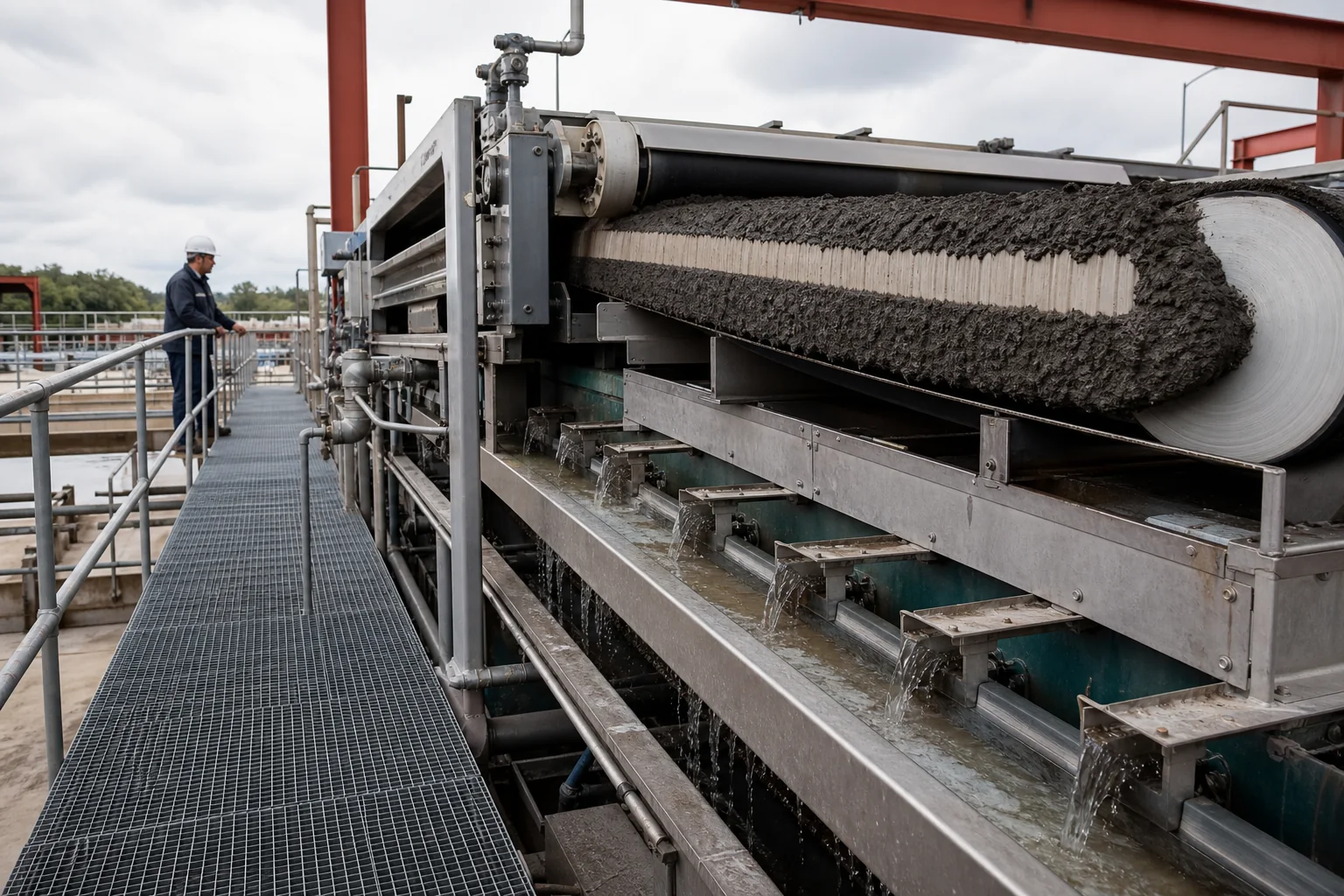
For belt pressing, observe drainage, fines retention, belt condition and cake release with meaningful equipment evidence. For other machines, use the appropriate capture and loading criteria. A beaker comparison alone cannot establish the long-run cleaning burden. Assess filtrate quality and the downstream route as well as cake consistency. The belt drainage checks connect trial observations with actual operation.
Approve the duty before comparing shipment prices
Retain the candidate identity, stream mix, preparation procedure and tested dose window. Calculate expected demand across the production schedule instead of only a favourable short run. Clarify packaging and delivery destination when comparing quotations. Where the sludge source changes seasonally or with product campaigns, state whether that range has been tested. A repeat order should preserve the approved product rather than substitute an unreviewed “food industry” polymer.
Evidence needed before purchase
Record the actual observation or document reference against each item. If a condition was not tested, keep it visible as an approval limitation. Purchasing, operations and receiving should use the same candidate identifier so a favourable result is not transferred to a different product or unreviewed delivery.
| Decision | Evidence | Release condition |
|---|---|---|
| Residual identity | Flotation/biological split and cleaning controls | Trial sample matches the intended dairy duty |
| Preparation | Defined concentration and solution age | Candidates are compared fairly |
| Machine balance | Capture, cleaning and cake handling | Price comparison follows technical qualification |
Information to send with the quotation request
Provide the dairy residual source, upstream chemicals, solids range, machine and cleaning-related feed changes. Include current grade, measured dose and operating endpoint. State the production schedule and expected quantity so the proposed order does not assume constant demand from an intermittent treatment duty.
Include the required quantity, packaging method and destination with the technical evidence. Use the cationic PAM trial and RFQ route for a focused sample review, then confirm documents, packaging and supply scope for the approved product. Gongyi Xinqi Polymer Co., Ltd. can review the application and quotation requirements. Grade suitability, delivery availability and commercial terms need confirmation; no universal dose or guaranteed treatment outcome should be inferred from an application name.
Sample pathway
Send the feed condition and machine target.
A focused sample set starts with representative sludge, active dose, equipment and acceptance data.