
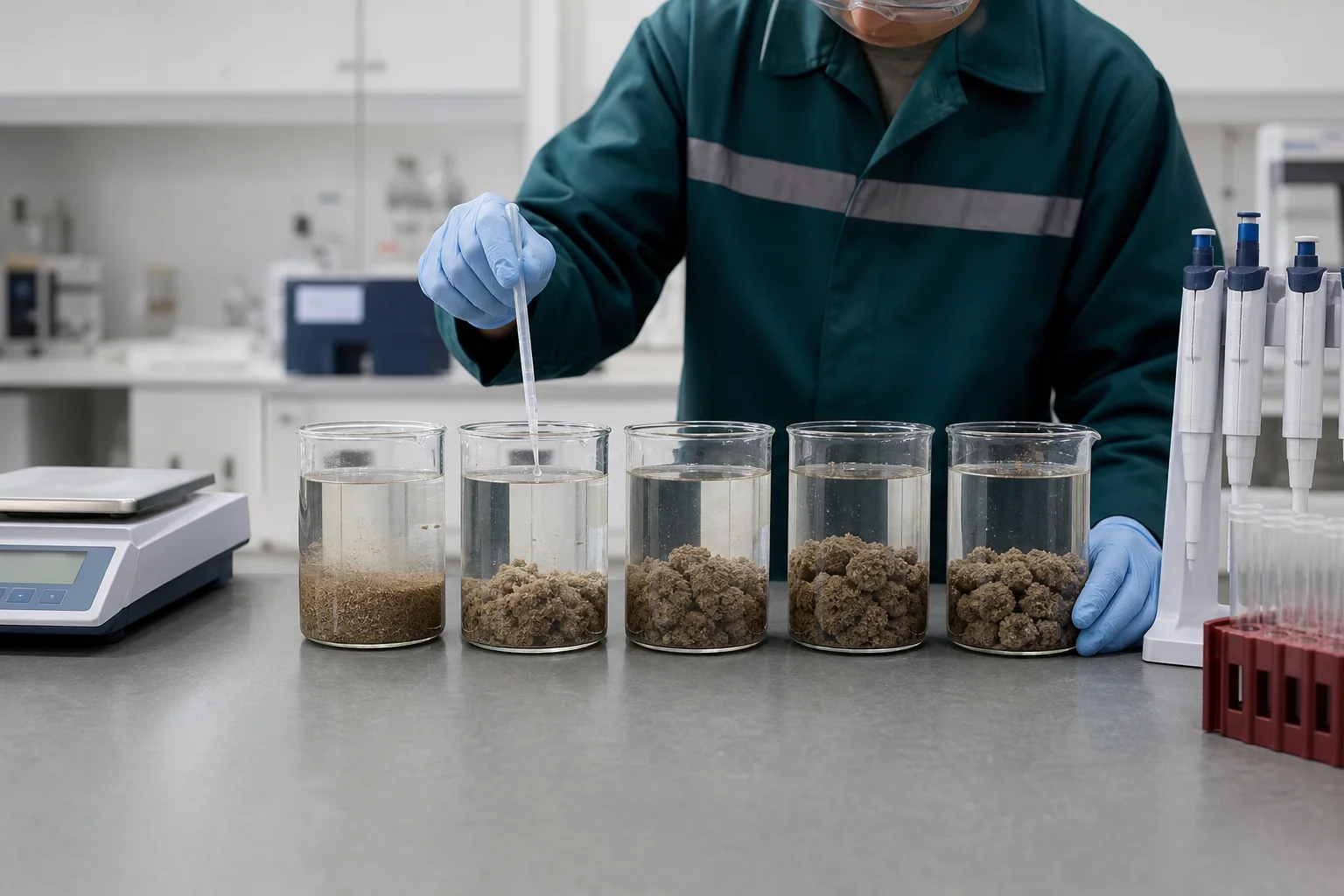
Sludge name is only the start of cationic PAM selection. Solids origin, digestion, ash, extracellular polymers, pH, conductivity, coagulant history and dewatering equipment determine which products deserve testing.
Separate biological and industrial questions
Characterize the sample before testing
Collect fresh, representative sludge and record the process condition at collection. Measure or report total solids, pH, temperature and relevant chemistry. Note storage time because biological sludge changes during holding. Preserve the same preparation and test sequence across candidates.
Connect the feed to the separator
A grade suitable for one sludge on a belt press may not be optimal when the same sludge enters a centrifuge or screw press. Use the equipment-specific endpoints to build the acceptance matrix.
Avoid universal dose tables
Published ranges cannot replace a dose curve on the actual feed. Normalize dose on dry solids, test the overdose boundary and confirm the result at plant scale. Xinqi Polymer can review the sludge and equipment record before preparing samples.