
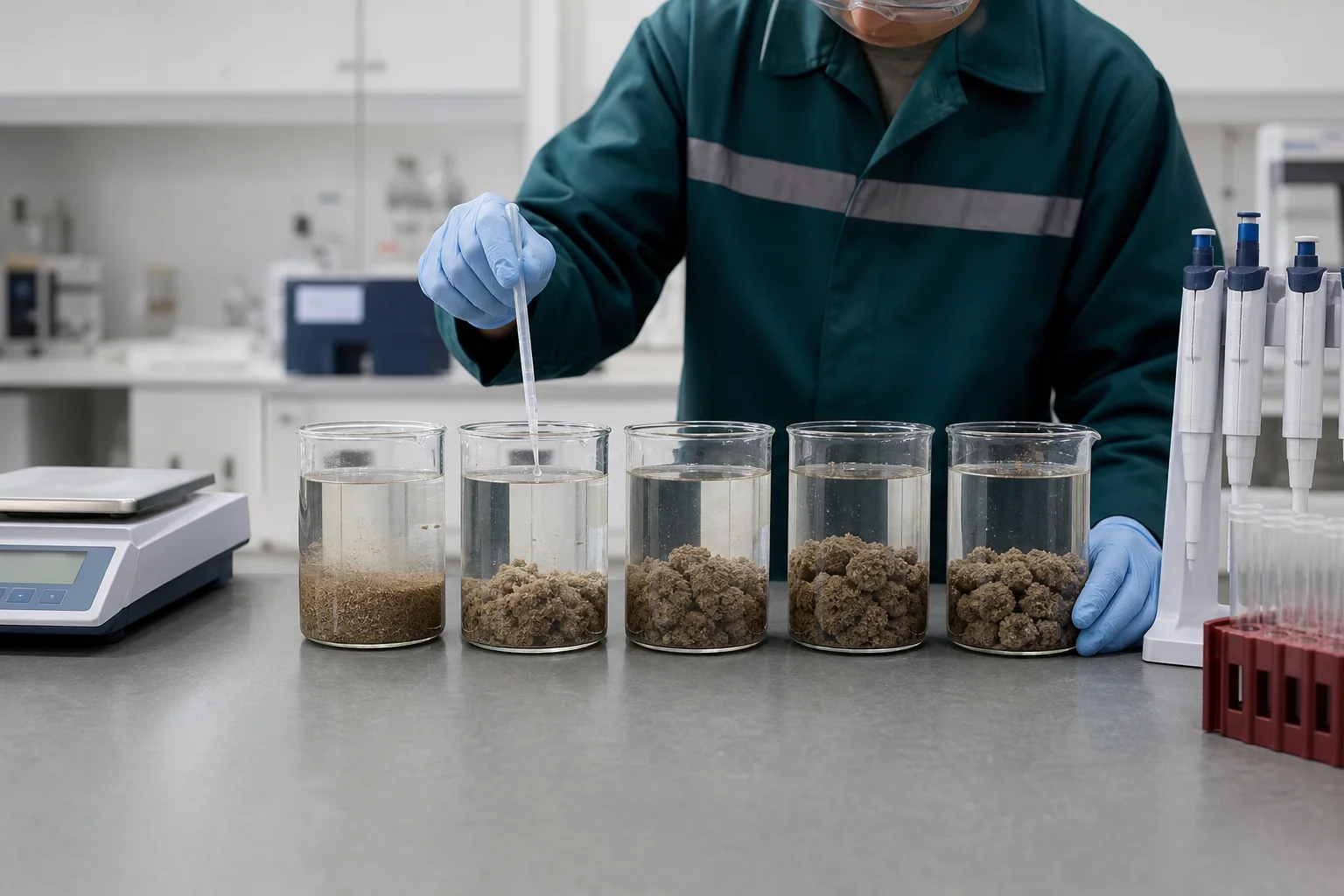
Cationic PAM grades are differentiated by more than a low, medium or high charge label. Charge density controls how strongly the polymer interacts with negatively charged sludge surfaces, while molecular range, chain architecture, product form and solution quality determine whether the resulting floc survives the selected equipment.
Use charge density as a controlled screening variable
A charge label is a useful way to organize samples, not a final specification. Begin with representative sludge and compare adjacent charge levels at equal active dose. Record floc formation, drainage, centrate or filtrate solids, cake solids and the width of the useful dose window. A grade that performs only at one narrow point is harder to operate than one that remains stable across normal feed variation.
Keep molecular range and equipment in the decision
Charge response cannot be separated from distribution and shear. Belt presses benefit from floc that releases free water in the gravity zone without blinding the belt. Decanter centrifuges require rapid conditioning and floc strength through intense acceleration. Screw presses need drainage and cake transport without excessive stickiness. Compare the equipment-specific selection paths before requesting a production quantity.
Information required for a useful grade shortlist
- Sludge source, primary/secondary proportion and digestion method
- Feed solids, pH, conductivity, temperature and upstream chemicals
- Dewatering machine, design throughput and current operating condition
- Current polymer form, preparation concentration and dose on dry solids
- Target capture, filtrate quality, cake solids, throughput and treatment cost
Gongyi Xinqi Polymer Co., Ltd. can prepare a focused sample set after these conditions are provided. Review the trial and RFQ route for the minimum data package.