
A useful cationic PAM request describes the sludge, machine and target. A product name without process data usually produces a broad sample set and delays the decision.
Describe the feed
Provide sludge source, primary and secondary proportions, digestion, total solids, pH, conductivity or salinity, temperature and upstream chemicals. Note sample age and whether the condition represents normal or difficult operation.
Describe the equipment
Identify centrifuge, belt press, screw press or other separator; include design and actual throughput, present settings and current performance. State whether capture, cake solids, filtrate quality, throughput, cleaning or treatment cost is the priority.
Normalize the current treatment
Report current polymer form and grade, stock concentration, actual pump output and dose per dry solids. If dose is unknown, provide sludge flow, feed solids and polymer solution flow so it can be calculated.
Plan the comparison
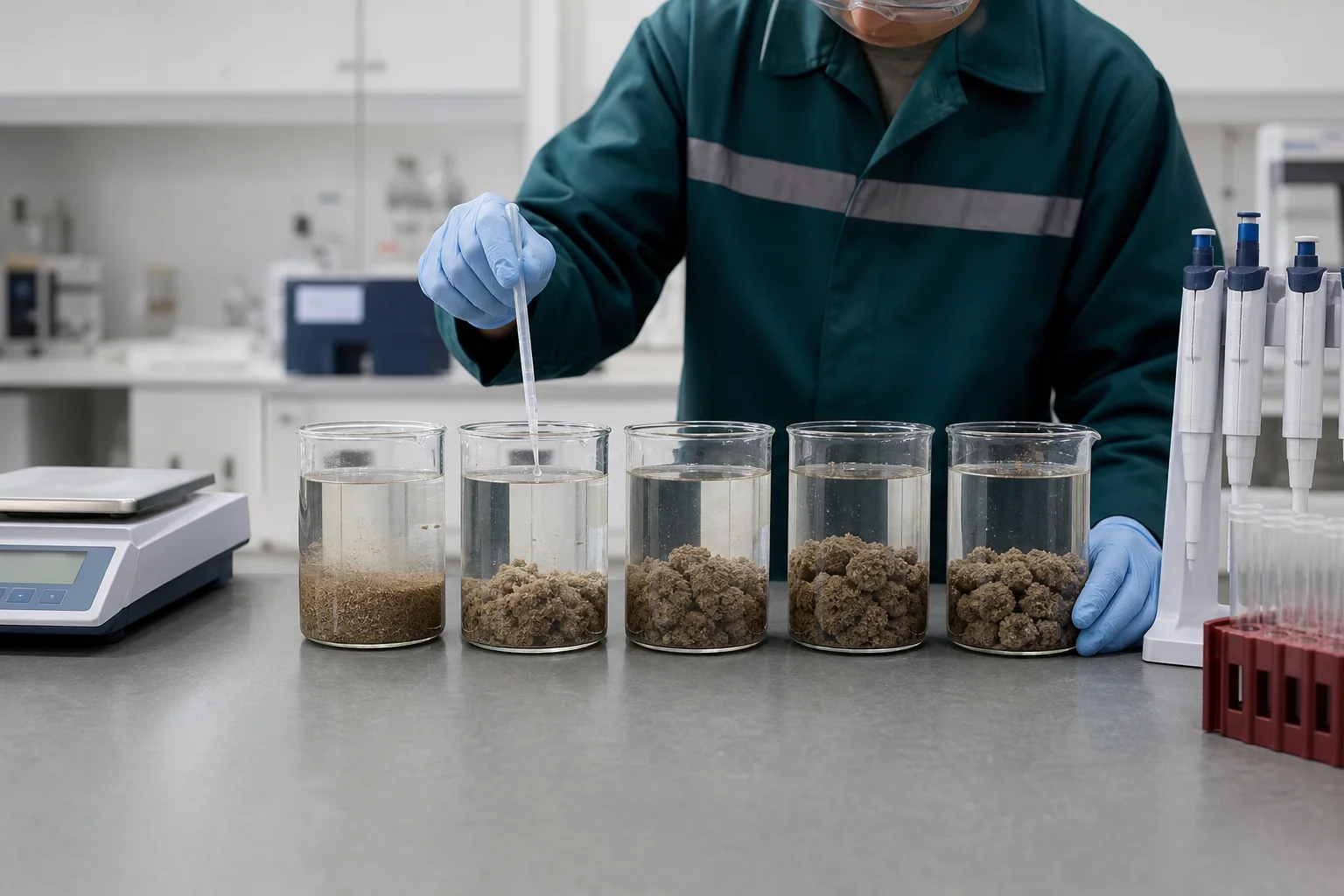
Use representative feed, equal active dose, consistent mixing and measured endpoints. Compare adjacent charge ranges, then refine the molecular range. Confirm the shortlist on the machine at steady state.
Complete the commercial request
Include monthly quantity, destination, packaging preference, Incoterm and document requirements. The form below routes the enquiry through the dedicated auxiliary-site channel to the Xinqi Polymer product team.
Sample pathway
Send the feed condition and machine target.
A focused sample set starts with representative sludge, active dose, equipment and acceptance data.