
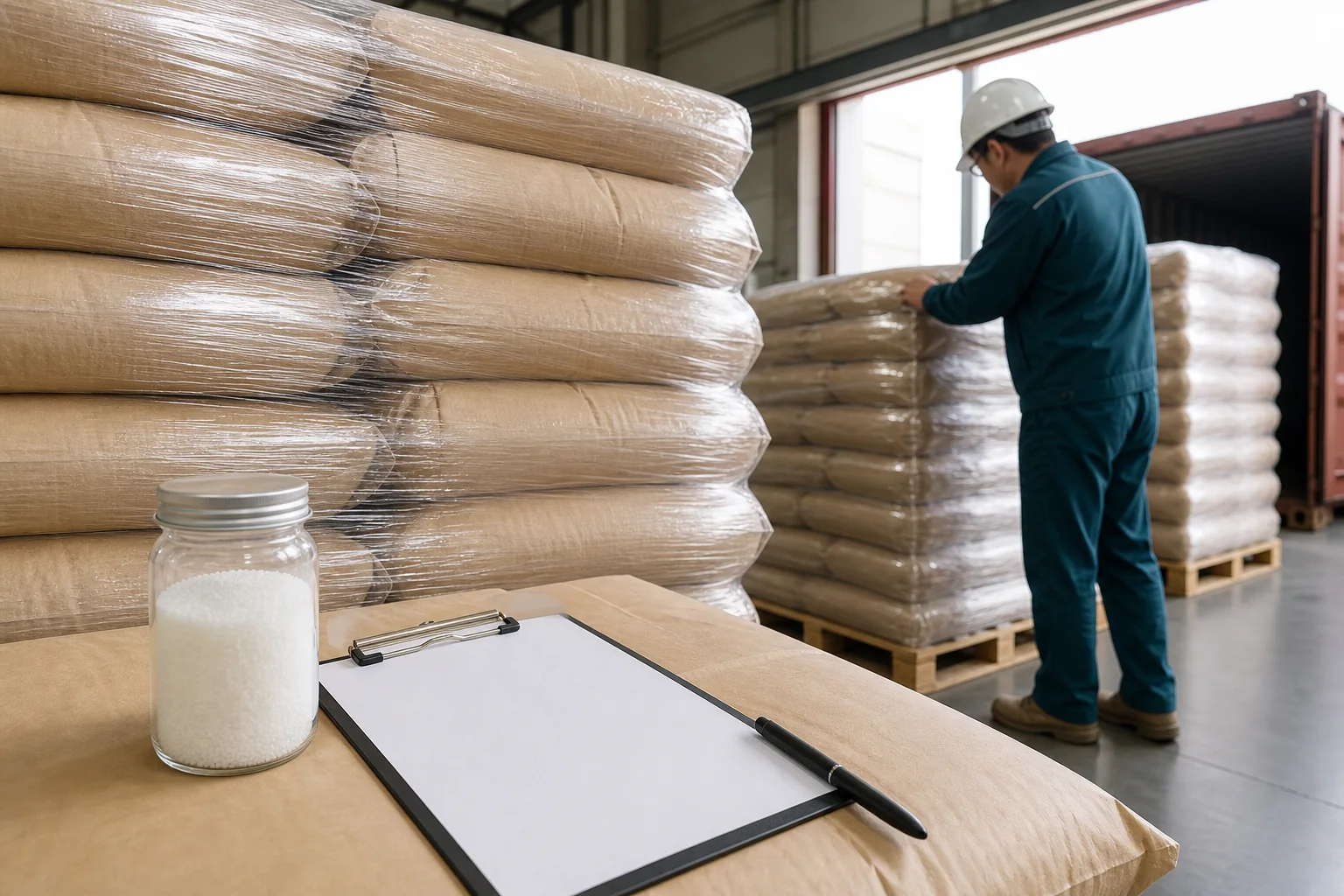
Cationic PAM quality control begins with the grade proven on the actual sludge. COA values support lot release, but they cannot replace dewatering performance or justify comparing results obtained by different methods.
Assign each document its purpose
The TDS describes the product and recommended handling. The SDS communicates hazards and safe use. The COA records agreed lot results. Confirm test conditions for viscosity, moisture, charge indicator, particle size and residual parameters before comparing suppliers.
Check dissolution and retained samples
Incoming inspection can include appearance, moisture, screen distribution and a defined dissolution check. Keep a retained reference lot and repeat a small application test when feed conditions allow. Fisheyes, long dissolution time or unexplained insolubles should be investigated against water temperature, mixing and test method before rejecting the lot.
Match packaging to the route
Dry cationic PAM is commonly supplied in lined bags and may be palletized or containerized according to order and destination. Confirm net weight, liner, pallet requirement, marks, documents and delivered term in the quotation. Store sealed product in a dry area and protect opened bags from moisture.
Specify what was actually approved
Use the validated Xinqi Polymer grade code, packaging and document requirements in the purchase order. For factory product support and broader company information, visit Gongyi Xinqi Polymer Co., Ltd. or send the structured RFQ.