
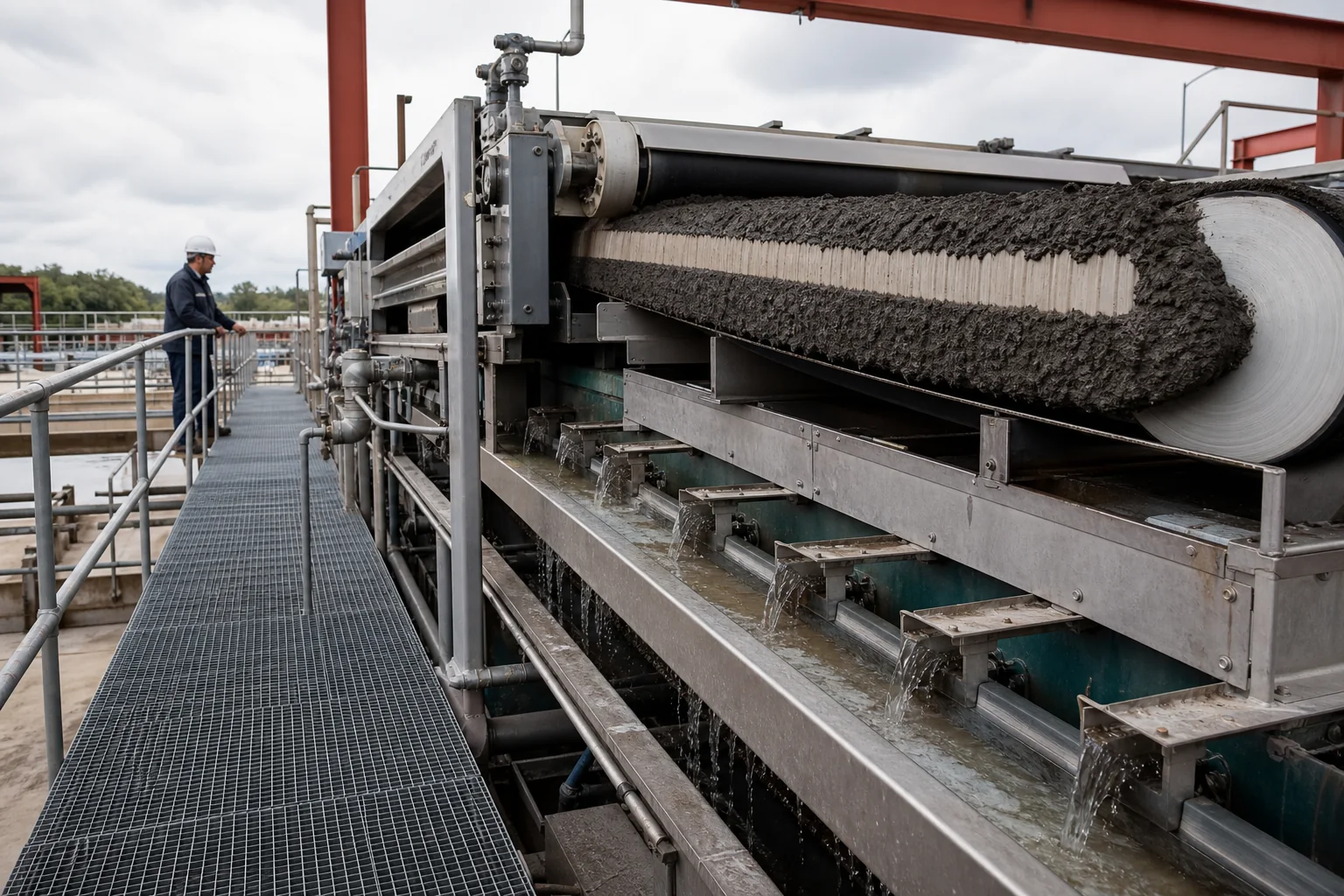
Aerobically digested sludge should be qualified as its own conditioning duty. A purchase based on a generic municipal-sludge label may overlook storage, solids variability and the press configuration. Use representative feed and a controlled reference to establish which cationic PAM candidate is practical to operate.
Record the actual digested feed condition
Describe digestion, withdrawal, any thickening and the storage interval before dewatering. Record feed solids and pH or conductivity where measured. Samples from the top of a settled tank may not represent the blended press feed. Note whether the plant operates dewatering intermittently, because its difficult condition may occur after a prolonged storage period. Give the supplier the normal operating range rather than a single composition treated as permanent.
Compare drainage and fines retention
Use a dose range and record free-water release together with suspended solids in the separated liquid. Fast drainage that loses fines is not necessarily good conditioning. For belt pressing, assess the gravity zone, belt condition and cake release with appropriate plant evidence. Consult belt-press drainage and capture checks when the laboratory and equipment results disagree. A visually large floc does not independently prove the required press performance.
Check intermittent make-down demand
Preparation equipment must provide fully usable solution when the press starts and during peak demand. Record the proposed concentration and aging procedure. Do not compensate for insufficient preparation time by increasing the nominal dose without checking solution quality. The wetting, aging and dilution guide helps distinguish a polymer mismatch from an operating problem. Include actual measured delivery when comparing candidates with the incumbent.
Specify a repeatable approval window
Define the tested solids range, dose range and machine endpoints that govern release. Include observations from representative storage conditions if those occur in service. Keep packaging and stock cover aligned with the intermittent schedule, avoiding a large shipment that cannot be stored or consumed within supplier guidance. A qualified order should identify the grade and preparation method, not merely request a high-charge powder because one sample happened to respond well.
Evidence needed before purchase
Record the actual observation or document reference against each item. If a condition was not tested, keep it visible as an approval limitation. Purchasing, operations and receiving should use the same candidate identifier so a favourable result is not transferred to a different product or unreviewed delivery.
| Decision | Evidence | Release condition |
|---|---|---|
| Storage condition | Withdrawal point and interval before dewatering | Comparison includes normal intermittent operation |
| Press balance | Drainage, filtrate, belt condition and cake | Faster water release retains acceptable capture |
| Preparation | Startup inventory and controlled aging | Press demand is met with usable solution |
Information to send with the quotation request
Send the aerobic digestion and storage arrangement, representative feed-solids range, press type, operating schedule and current preparation cycle. Explain whether the main target is capture, cake handling, reduced consumption or stable startup. Provide the recorded candidate dose window instead of a single pump percentage.
Include the required quantity, packaging method and destination with the technical evidence. Use the cationic PAM trial and RFQ route for a focused sample review, then confirm documents, packaging and supply scope for the approved product. Gongyi Xinqi Polymer Co., Ltd. can review the application and quotation requirements. Grade suitability, delivery availability and commercial terms need confirmation; no universal dose or guaranteed treatment outcome should be inferred from an application name.
Sample pathway
Send the feed condition and machine target.
A focused sample set starts with representative sludge, active dose, equipment and acceptance data.