
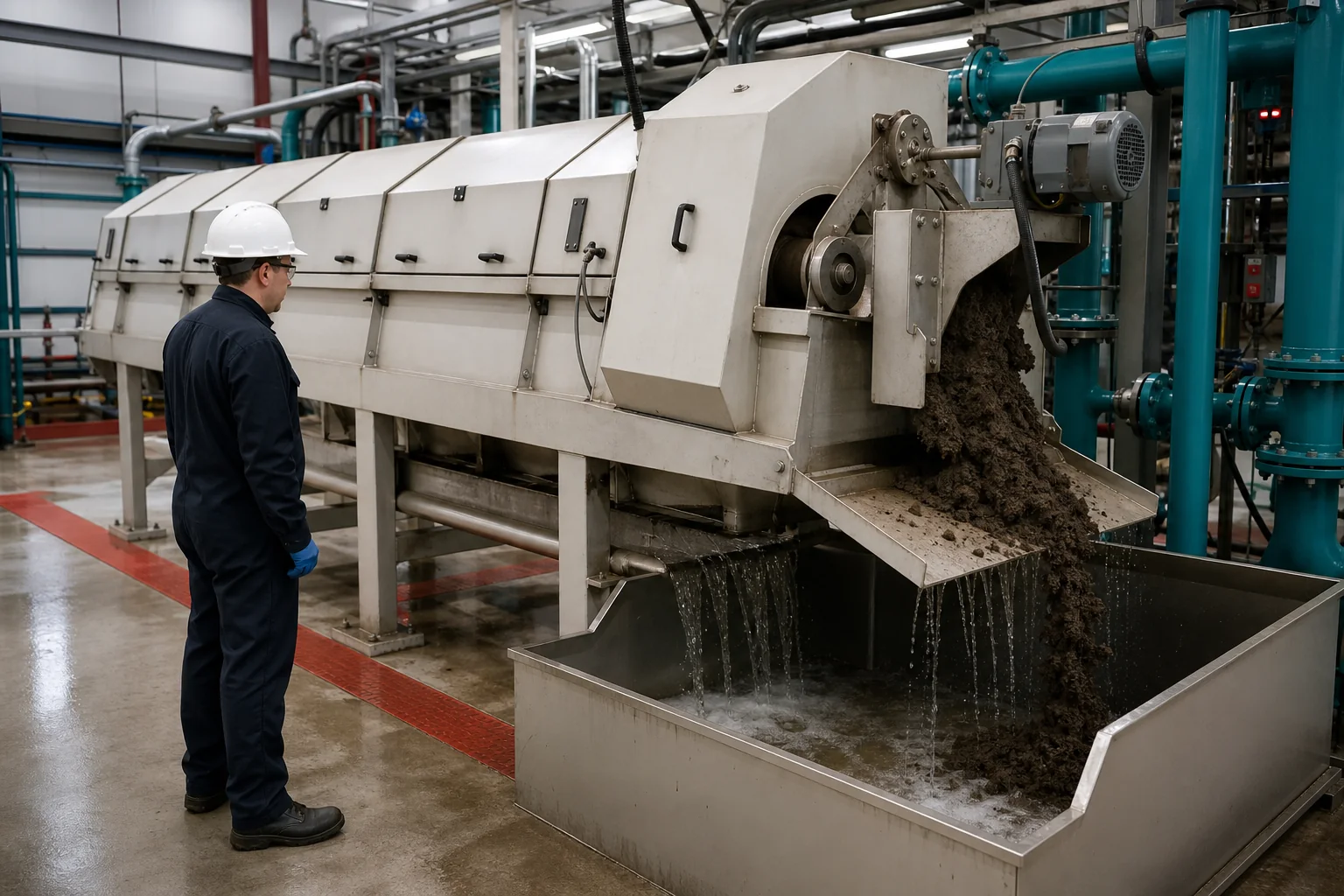
Industrial organic sludge can vary sharply with production recipe, cleaning cycles, equalization, pH control and coagulant use. A product chosen from the industry name alone may fail when the production campaign changes.
Map the wastewater process
Describe raw wastewater sources, biological treatment, DAF or clarification, coagulants, neutralization and sludge blending. Note fats, fibers, dyes, surfactants, salts or other components that may influence polymer demand and water release.
Sample the range, not only the average
Collect representative high- and low-load conditions where possible. Compare cationic grades at equal active dose and apply a consistent shear sequence. A candidate should maintain acceptable filtrate or centrate across the expected feed envelope.
Include downstream handling
Cake handling, hauling, odor control and return-liquor load can change the economic result. Record cake consistency, release, stickiness and cleaning demand in addition to cake solids. Use the active-dose method for defensible cost comparison.
Send production context with the RFQ
Provide industry process, sludge source, feed solids, pH and conductivity, upstream chemicals, equipment, current product and monthly demand. This information helps Xinqi Polymer prepare a focused grade set and suitable packaging quotation.