
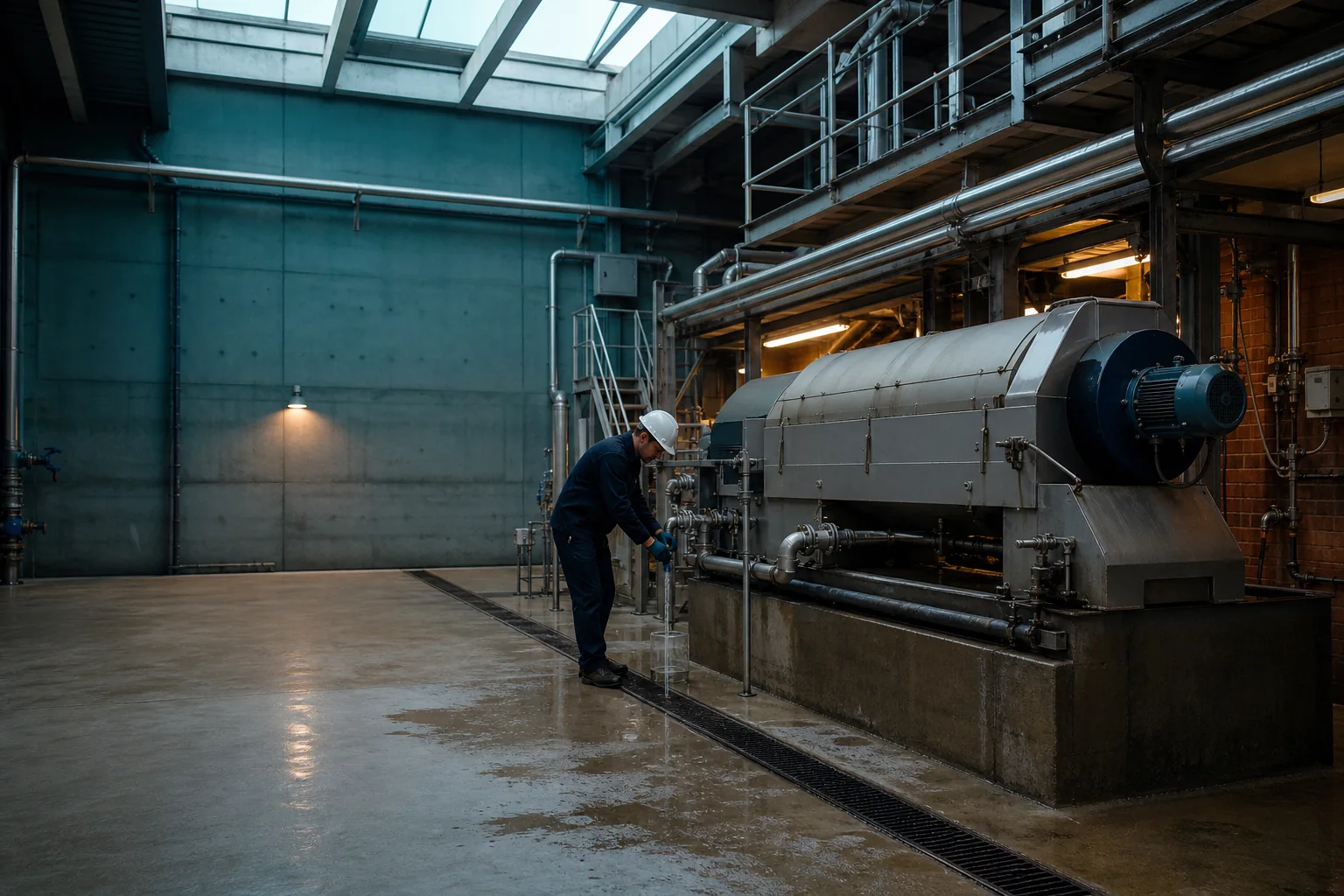
A polymer enquiry for leachate treatment must specify whether the duty is liquid treatment or dewatering its residual sludge. Cationic PAM may be screened for some biological residuals, but it should not be presented as a universal chemical for removing dissolved leachate contaminants.
Define the residual treatment stage
Identify the biological and chemical treatment steps before sludge collection. State whether chemically precipitated solids or other residuals are included. Record feed solids, pH, conductivity and upstream additions where available. The actual sample matters more than the broad leachate label. Explain the normal feed variation and any operating condition that is excluded from polymer qualification rather than implying that one candidate can handle every treatment upset.
Prepare and compare on controlled conditions
Use a defined make-down water source, concentration and solution age. Compare candidate and reference at a consistent active dose on the same representative sludge. If upstream chemistry changes between runs, the results do not isolate polymer performance. Review the preparation guide before attributing a weak response to charge density. Keep the treatment stage, sampling interval and handling record with the trial.
Assess the machine and liquid return route
For centrifugal dewatering, record solids capture, centrate quality, cake condition and practical loading. For presses, use the appropriate drainage and release checks. Separated liquid may retain dissolved constituents, so its route and treatment requirements remain important even with good solids capture. The centrate-solids diagnosis helps distinguish conditioning problems from equipment or feed changes.
State the limits of purchase approval
Keep the approved candidate linked to the tested residual composition and preparation method. Request technical documents and supply terms for that identity. If treatment changes introduce a materially different sludge, conduct a new comparison rather than assume the original grade remains optimal. Do not promise discharge compliance, contaminant destruction or unrestricted cake use from a dewatering trial. Such outcomes require separate treatment and management evidence beyond polymer selection.
Evidence needed before purchase
Record the actual observation or document reference against each item. If a condition was not tested, keep it visible as an approval limitation. Purchasing, operations and receiving should use the same candidate identifier so a favourable result is not transferred to a different product or unreviewed delivery.
| Decision | Evidence | Release condition |
|---|---|---|
| Residual stage | Biological/chemical mix and upstream process | RFQ targets sludge conditioning, not dissolved removal |
| Controlled comparison | Same feed and active-dose method | Product advantage is supported by a fair trial |
| Return route | Centrate/filtrate quality and treatment destination | Solids capture does not overstate overall treatment |
Information to send with the quotation request
Send the residual-generating process, sludge blend, measured solids and water chemistry, dewatering machine and current polymer method. Include the separated-liquid route and the specific acceptance endpoints. Explain any treatment changes expected before the quoted supply will be consumed.
Include the required quantity, packaging method and destination with the technical evidence. Use the cationic PAM trial and RFQ route for a focused sample review, then confirm documents, packaging and supply scope for the approved product. Gongyi Xinqi Polymer Co., Ltd. can review the application and quotation requirements. Grade suitability, delivery availability and commercial terms need confirmation; no universal dose or guaranteed treatment outcome should be inferred from an application name.
Sample pathway
Send the feed condition and machine target.
A focused sample set starts with representative sludge, active dose, equipment and acceptance data.