
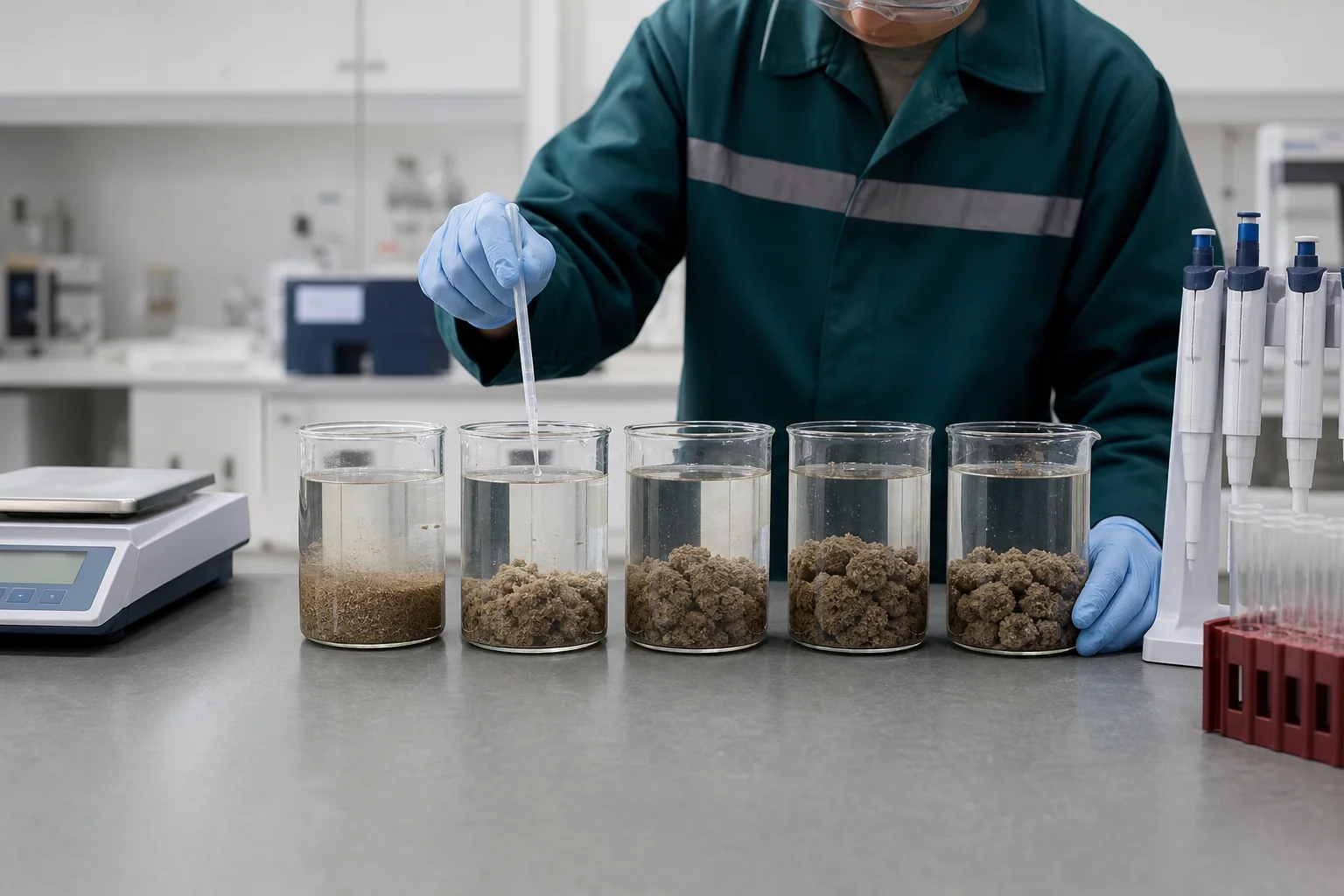
Cationic PAM used to dewater textile biological sludge is a different purchasing duty from a chemical sold for colour removal in wastewater. Specify the treatment stage and residual solids. A suitable sludge conditioner does not establish that dissolved colour or other contaminants have been removed.
Separate wastewater treatment from sludge conditioning
Identify whether the sample contains biological solids, chemically precipitated material or a blend. Record upstream reagents and the normal contribution of production streams. Dyeing and washing changes can affect water chemistry, but an industry label is not a charge-demand measurement. Provide pH or conductivity ranges where available. Do not compare a sludge-dewatering candidate against a wastewater clarification product without explaining the different feed and operating objective.
Use the actual preparation water
State whether the polymer is prepared with fresh, recycled or another controlled water source. Record concentration, temperature and aging. A successful comparison prepared in clean laboratory water may not reproduce the installed make-down conditions. The solution preparation guide helps organize these variables. Where salinity or upstream chemistry varies materially, compare representative conditions rather than assuming that one low-conductivity sample establishes the whole duty.
Assess equipment results and return liquor
Use the installed press or centrifuge endpoints: capture, separated-liquid quality, cake handling and throughput. Coloured filtrate does not by itself measure suspended-solids capture, and clear appearance does not prove complete contaminant removal. Agree the analytical and operating results that matter to the plant. Keep the test focused on the conditioning duty, while documenting any broader treatment limitation that cannot be resolved by changing polymer alone.
Define product approval for the intended range
Identify the candidate, preparation method, upstream treatment and tested feed range in the order record. Include a plant trial where equipment performance matters. A supplier change should be compared against the approved reference, not accepted solely because the new quotation repeats the words “textile sludge.” Use pilot-to-production acceptance to keep sample results and commercial release connected.
Evidence needed before purchase
Record the actual observation or document reference against each item. If a condition was not tested, keep it visible as an approval limitation. Purchasing, operations and receiving should use the same candidate identifier so a favourable result is not transferred to a different product or unreviewed delivery.
| Decision | Evidence | Release condition |
|---|---|---|
| Duty | Biological versus chemical sludge and upstream reagents | RFQ does not confuse dewatering with colour removal |
| Water conditions | Feed and preparation-water ranges | Qualification represents intended operating chemistry |
| Result | Capture, cake and relevant liquid endpoints | Approval states what was actually measured |
Information to send with the quotation request
Send the sludge origin, stream mix, upstream chemicals, solids range, conductivity or pH observations and preparation-water source. Identify the dewatering machine and the intended separated-liquid route. State the candidate trial limits clearly, particularly if only one production campaign was sampled.
Include the required quantity, packaging method and destination with the technical evidence. Use the cationic PAM trial and RFQ route for a focused sample review, then confirm documents, packaging and supply scope for the approved product. Gongyi Xinqi Polymer Co., Ltd. can review the application and quotation requirements. Grade suitability, delivery availability and commercial terms need confirmation; no universal dose or guaranteed treatment outcome should be inferred from an application name.
Sample pathway
Send the feed condition and machine target.
A focused sample set starts with representative sludge, active dose, equipment and acceptance data.