
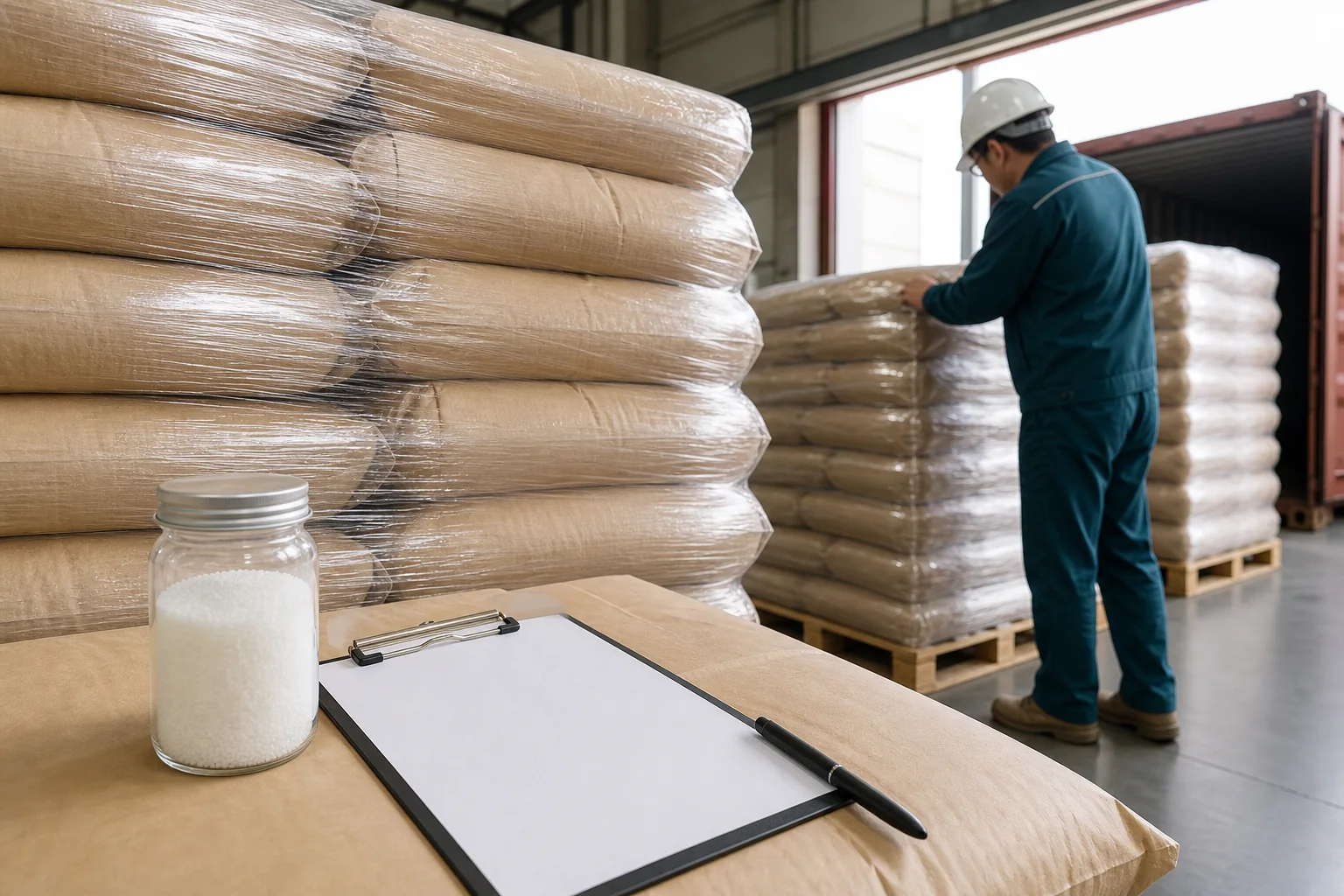
A bulk dry cationic PAM quotation is comparable only when its product and commercial scope are clear. The lowest price per kilogram may not deliver the lowest cost for the qualified sludge duty. Approve the application first, then normalize the quotation against useful dose and the actual delivered package.
Confirm which product is being priced
Ask for the candidate code, ionic range, form and relevant product documents. Identify whether the price refers to an approved grade or an untested starting candidate. Dry-product mass and active-polymer basis should not be treated as identical without confirmed data. Avoid inventing a standard active fraction to simplify the calculation. The supplier sample checklist links the quotation with the tested material.
Normalize consumption before judging unit price
Use the successful dose per dry ton and an explicitly stated basis. For a dry-product dose, chemical cost per dry ton is dose multiplied by delivered price per kilogram. If a comparison uses active dose, convert using supplier-confirmed product information first. Do not multiply an active dose by a price for total product mass without the conversion. Review dose normalization where concentration or product form differs.
Compare the delivered commercial scope
State quantity, destination, package preference and the commercial delivery terms requested. Confirm which freight, handling or other charges are included rather than assume the phrase “bulk price” means delivery to the plant. Package dimensions and transfer method can affect usable handling. Supplier availability and dispatch timing require confirmation for the selected product; a broad product listing is not evidence that a particular lot is reserved.
Keep bulk volume within storage and approval limits
Size the order against real consumption and protected stock capacity. Confirm remaining shelf life and supplier storage guidance for the proposed material. Do not extend a promising sample result into a large order before a meaningful plant approval. Where split shipments are discussed, distinguish estimates from committed orders. Preserve lot documents and the approved identity so later deliveries can be evaluated against the same dewatering duty.
Evidence needed before purchase
Record the actual observation or document reference against each item. If a condition was not tested, keep it visible as an approval limitation. Purchasing, operations and receiving should use the same candidate identifier so a favourable result is not transferred to a different product or unreviewed delivery.
| Decision | Evidence | Release condition |
|---|---|---|
| Price basis | Approved code and confirmed mass/active basis | Consumption and price use compatible units |
| Delivered scope | Quantity, destination, package and included charges | Quotation comparisons include the same services |
| Order size | Use rate, storage and qualified demand | Bulk volume is justified by operating evidence |
Information to send with the quotation request
Send approved candidate identity, verified consumption basis, monthly demand range, packaging method and destination. Include whether the quotation is for a trial quantity or repeat bulk supply. Ask the supplier to identify product, delivery scope and available documents explicitly so price differences can be explained rather than guessed.
Include the required quantity, packaging method and destination with the technical evidence. Use the cationic PAM trial and RFQ route for a focused sample review, then confirm documents, packaging and supply scope for the approved product. Gongyi Xinqi Polymer Co., Ltd. can review the application and quotation requirements. Grade suitability, delivery availability and commercial terms need confirmation; no universal dose or guaranteed treatment outcome should be inferred from an application name.
Sample pathway
Send the feed condition and machine target.
A focused sample set starts with representative sludge, active dose, equipment and acceptance data.