
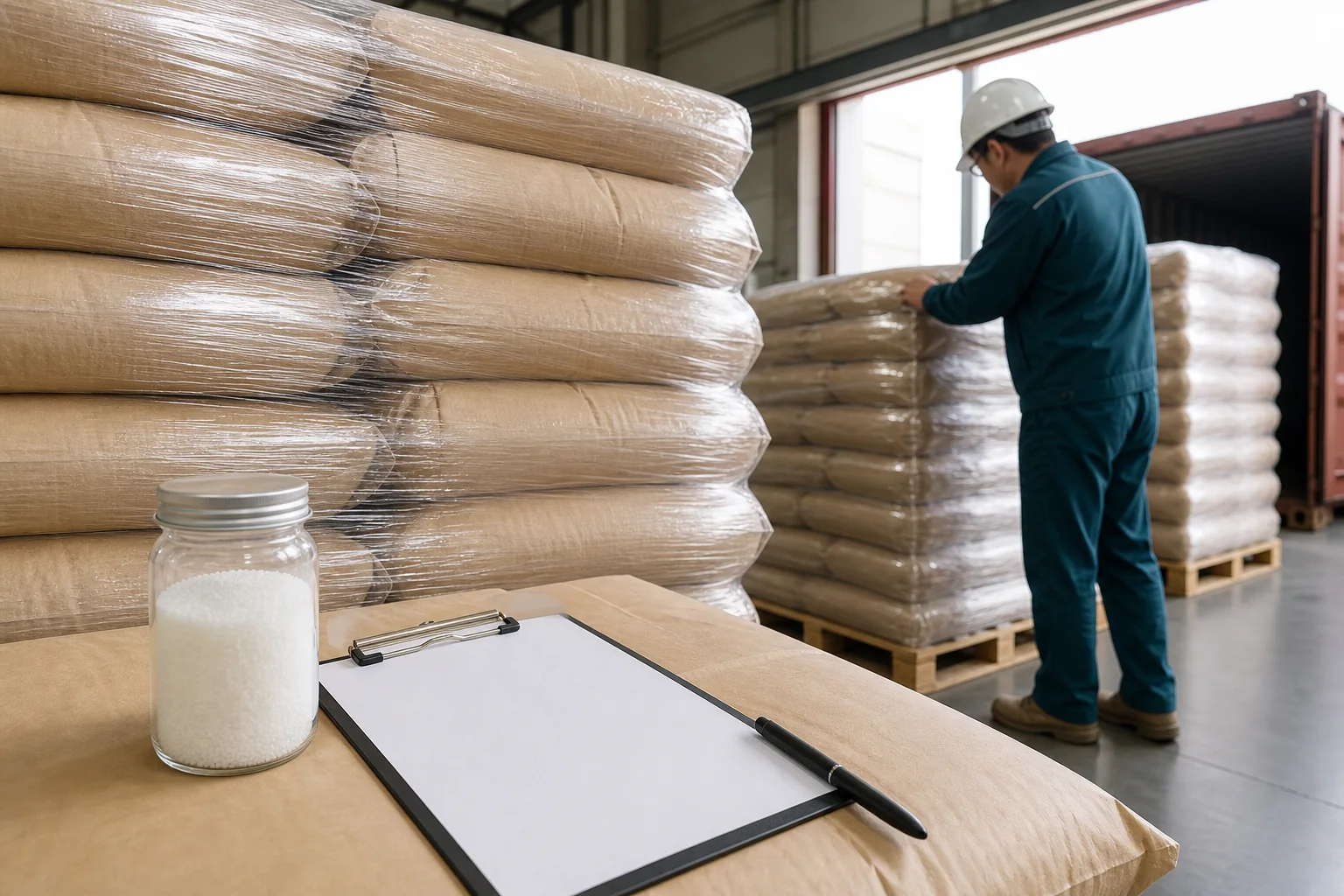
Humid-season purchasing should account for the route from delivery vehicle to feeder, not only a dry warehouse on paper. Dry cationic PAM needs handling consistent with the selected supplier’s guidance. Order size, packaging and unloading arrangements can determine whether an approved product remains practical to use.
Review exposure along the whole handling route
Identify covered unloading, temporary holding, storage and package opening near wet equipment. Record whether rain, condensation or washdown can reach the material. Closed packages and powder left in a feeder hopper have different exposure conditions. Follow supplier storage guidance rather than inventing a universal humidity limit. Make the receiving and operating teams aware of the specific handling route that the quotation is expected to support.
Size inventory against usable protected space
Estimate normal consumption and peak demand from the qualified duty. Do not buy a long period of stock solely because the unit price falls if protected space or rotation is inadequate. Confirm remaining shelf life for the proposed lots where relevant. Separate forecasts from confirmed delivery orders. The bulk quotation review keeps commercial quantity linked to storage and actual operating demand.
Choose packaging that fits safe transfer
Specify the package and unloading method the plant can use without exposing powder unnecessarily. Confirm dimensions and equipment compatibility with the relevant teams. A package-size change can affect transfer even when the polymer code stays the same. Keep openings, partial containers and lot identity controlled under the site procedure. The feeder compatibility checklist addresses the transition from protected stock into actual preparation.
Record condition before release
Inspect delivered packages and note signs of damage or moisture exposure. Where a discrepancy occurs, follow the release or hold procedure instead of mixing the lot into approved material. A physical appearance check does not replace product identity or application evidence. Retain relevant samples and documents. If preparation changes after delivery, investigate water, feeder exposure, concentration and aging as well as the received lot before deciding what caused the difference.
Evidence needed before purchase
Record the actual observation or document reference against each item. If a condition was not tested, keep it visible as an approval limitation. Purchasing, operations and receiving should use the same candidate identifier so a favourable result is not transferred to a different product or unreviewed delivery.
| Decision | Evidence | Release condition |
|---|---|---|
| Exposure | Covered unloading, storage and feeder transfer | Handling follows supplier and site procedures |
| Quantity | Consumption, protected capacity and shelf-life information | Order size remains usable |
| Receiving | Package integrity, lot identity and discrepancies | Release is based on recorded condition |
Information to send with the quotation request
Send the protected storage capacity, unloading route, package-transfer equipment and expected consumption period. Include any wet-area exposure or partial-package practice that affects operation. Request packaging and shipment timing suitable for those constraints, with grade and lot markings retained throughout handling.
Include the required quantity, packaging method and destination with the technical evidence. Use the cationic PAM trial and RFQ route for a focused sample review, then confirm documents, packaging and supply scope for the approved product. Gongyi Xinqi Polymer Co., Ltd. can review the application and quotation requirements. Grade suitability, delivery availability and commercial terms need confirmation; no universal dose or guaranteed treatment outcome should be inferred from an application name.
Sample pathway
Send the feed condition and machine target.
A focused sample set starts with representative sludge, active dose, equipment and acceptance data.