
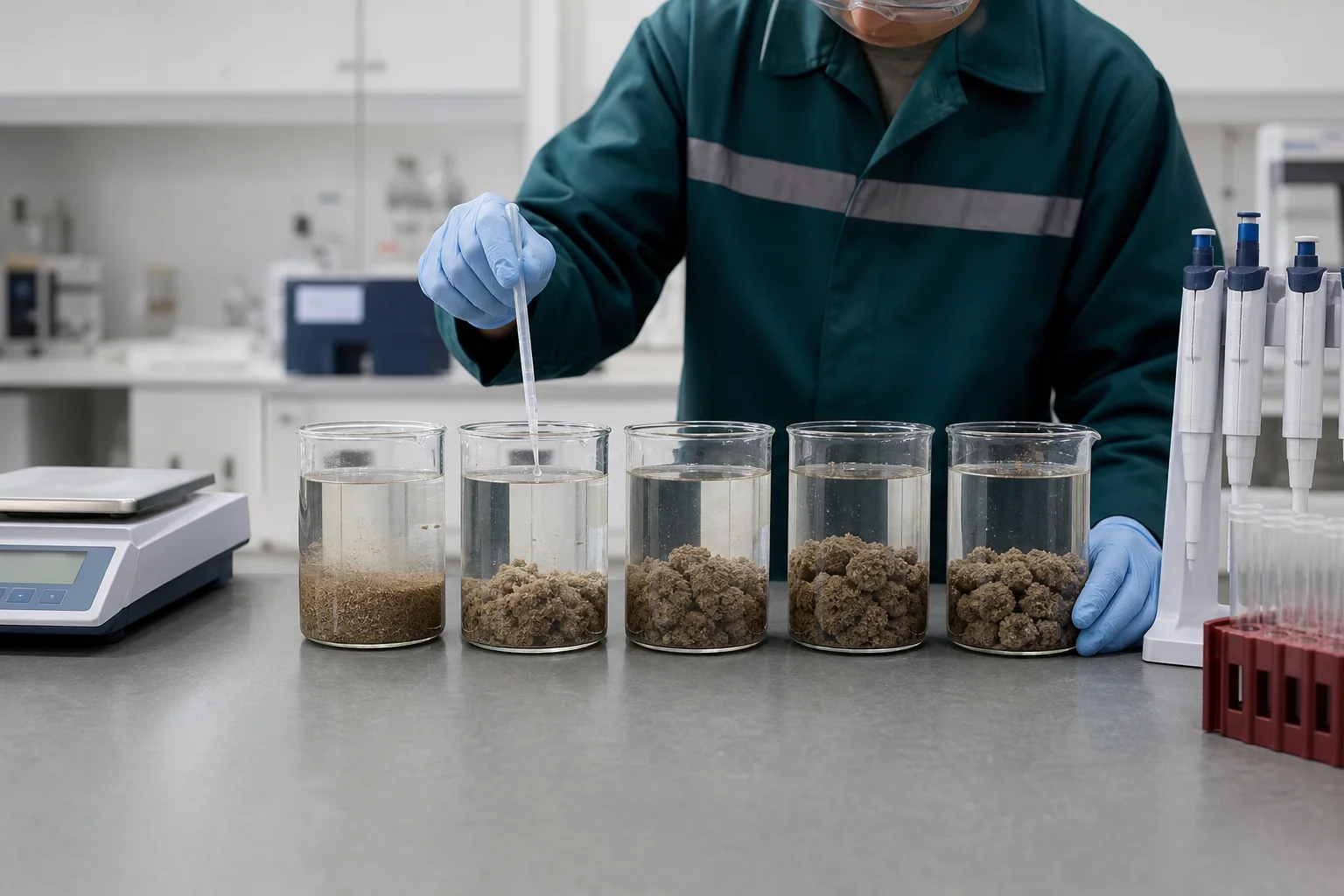
A successful laboratory sample is a reason to continue evaluation, not automatic permission for a full supplier change. Cationic PAM approval should progress from controlled comparison to meaningful equipment evidence and traceable first delivery. Purchasing must retain the conditions under which equivalence was demonstrated.
Establish a reproducible reference
Identify the incumbent product and lot, preparation water, stock concentration and solution age. Test it alongside each candidate on the same feed. Historic results from a different daily sample are a weak comparison if solids or chemistry change. Keep candidate labels unambiguous. The supplier evaluation checklist provides the document and sample controls needed before the commercial comparison.
Select a useful dose window
Normalize dose per dry solids and compare the relevant treatment endpoints. Assess how the candidate behaves around the apparent optimum, not only at one setting. Include preparation reliability and practical pump delivery. A product that requires unsuitable stock concentration or performs only within a very narrow range may create operational cost. Review dose calculation before interpreting a candidate advantage.
Use a controlled machine introduction
Agree representative machine-trial conditions with operations and keep a workable fallback. Document the settings, feed, capture, liquid quality, cake and throughput. Do not mix different grades in a preparation tank merely to use up stock. Compare under normal conditions and justified difficult-feed cases. A short quiet-period success should not be presented as proof of the whole operating range. Keep the untested conditions explicit in any limited approval.
Release the first delivery against its identity
Confirm the product code, lot documents, package condition and retained reference. Define who resolves discrepancies before the material is consumed. If the supplier proposes a change from the tested product, review it rather than accepting the same marketing label. Purchasing may negotiate while technical approval remains pending; those decisions should not be conflated. Retain written reasons for acceptance, dose limits and the conditions that require future review.
Evidence needed before purchase
Record the actual observation or document reference against each item. If a condition was not tested, keep it visible as an approval limitation. Purchasing, operations and receiving should use the same candidate identifier so a favourable result is not transferred to a different product or unreviewed delivery.
| Decision | Evidence | Release condition |
|---|---|---|
| Reference | Incumbent and candidate identity with paired preparation | Comparison is reproducible |
| Machine acceptance | Representative feed and complete dewatering results | Candidate is approved within a stated operating range |
| First delivery | Lot identity and receiving records | Shipment corresponds to the qualified product |
Information to send with the quotation request
Send incumbent data, candidate results, feed range, machine settings and measured dose basis. Identify whether laboratory, limited machine or full production approval is complete. Include the proposed first-order quantity and state which acceptance condition still needs verification before bulk commitment.
Include the required quantity, packaging method and destination with the technical evidence. Use the cationic PAM trial and RFQ route for a focused sample review, then confirm documents, packaging and supply scope for the approved product. Gongyi Xinqi Polymer Co., Ltd. can review the application and quotation requirements. Grade suitability, delivery availability and commercial terms need confirmation; no universal dose or guaranteed treatment outcome should be inferred from an application name.
Sample pathway
Send the feed condition and machine target.
A focused sample set starts with representative sludge, active dose, equipment and acceptance data.