
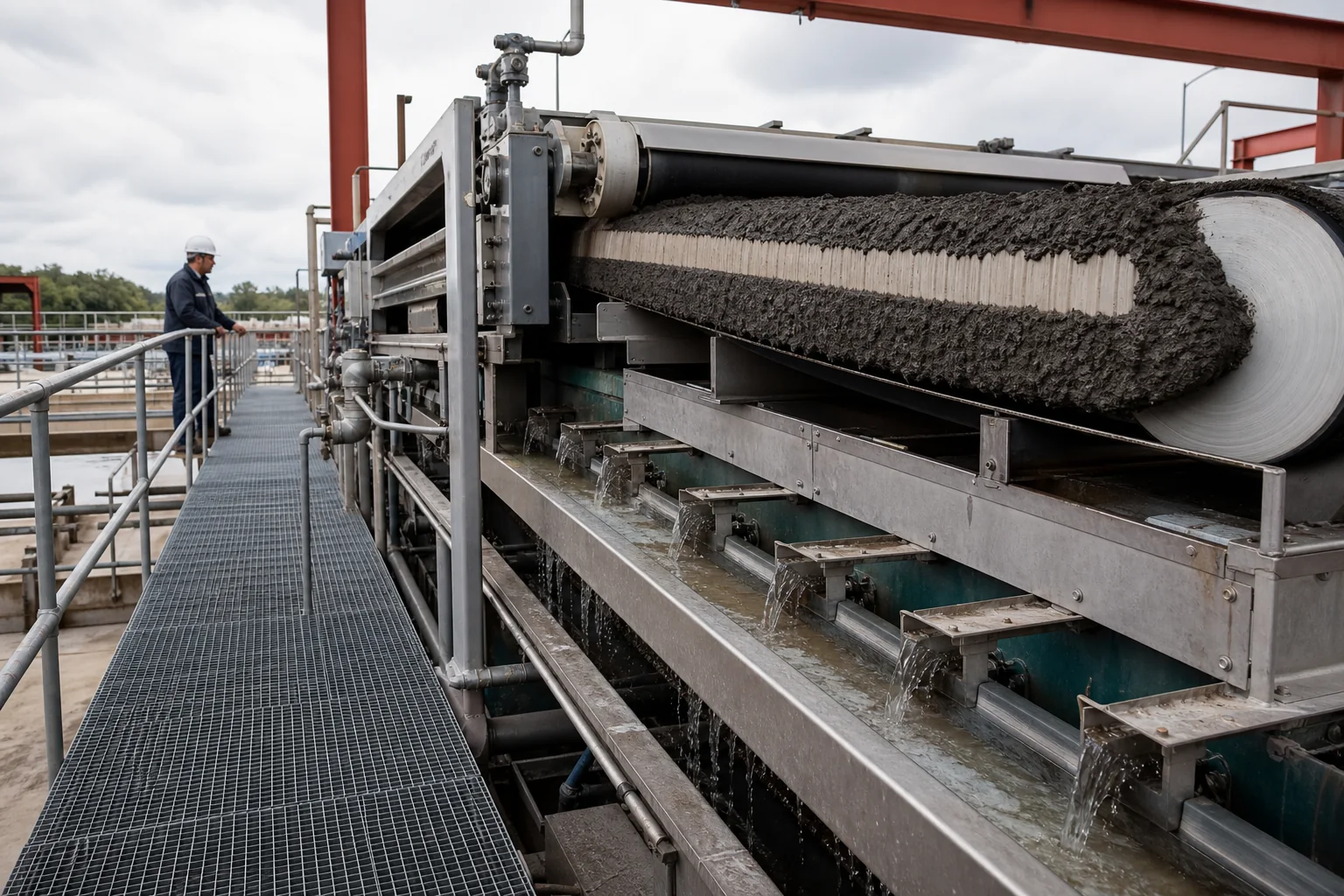
Paper-mill sludge purchasing should distinguish biological residuals from primary fibre sludge and paper-machine retention chemicals. The presence of fibres does not make those products interchangeable. Describe the solids sent to dewatering and use representative blend conditions to qualify the cationic PAM.
Define the biological and fibre contribution
Record whether primary fibre material is blended with secondary biological sludge. Include ash or mineral content where known and identify upstream reagents. Changes in furnish or recovery practices can alter the residual stream. State the sample collection point and the normal blend range. Do not infer a universal charge class from the words “paper sludge”; a candidate should be narrowed by actual feed response and the intended machine.
Compare capture and useful drainage
Test a dose range and assess fine-solids retention alongside drainage. A fibrous structure may look drainable while allowing a poor filtrate or an unstable cake. For belt presses, include belt cleanliness and release; for other machines, use their operating endpoints. The belt-press guide is useful when drainage improves but capture remains unsatisfactory. Avoid approving a product solely from a fast initial water release.
Keep wastewater polymers separate from paper additives
A candidate qualified for sludge conditioning is not automatically appropriate for furnish retention, drainage on the paper machine or a contact-sensitive product. Those duties have their own chemistry, process and approval requirements. Clearly mark the application on the quotation and sample label. This prevents a supplier code or marketing description from being used as evidence of compatibility outside the tested residual treatment duty.
Control repeat supply across feed changes
Estimate consumption from dry-solids loading and the verified dose window, with production-related variation explicit. Preserve candidate identity and preparation conditions in the purchase record. If the mill changes the fibre/biological blend or upstream chemical program, review the approval range. Use the tender specification checklist to state the relevant duty and documents without substituting an ambiguous industry-wide product description.
Evidence needed before purchase
Record the actual observation or document reference against each item. If a condition was not tested, keep it visible as an approval limitation. Purchasing, operations and receiving should use the same candidate identifier so a favourable result is not transferred to a different product or unreviewed delivery.
| Decision | Evidence | Release condition |
|---|---|---|
| Residual mix | Biological, fibre and mineral contribution | Trial represents the actual dewatering blend |
| Performance | Capture, drainage and equipment handling | Release is not based on drainage alone |
| Application identity | Sludge duty versus paper-machine additive | Purchase code is approved for its intended use |
Information to send with the quotation request
Provide biological and primary-sludge contributions, fibre or ash information, upstream treatment, feed solids and machine type. Identify the incumbent grade and preparation method. State any furnish or production change likely to alter the dewatering feed during the supply period.
Include the required quantity, packaging method and destination with the technical evidence. Use the cationic PAM trial and RFQ route for a focused sample review, then confirm documents, packaging and supply scope for the approved product. Gongyi Xinqi Polymer Co., Ltd. can review the application and quotation requirements. Grade suitability, delivery availability and commercial terms need confirmation; no universal dose or guaranteed treatment outcome should be inferred from an application name.
Sample pathway
Send the feed condition and machine target.
A focused sample set starts with representative sludge, active dose, equipment and acceptance data.