
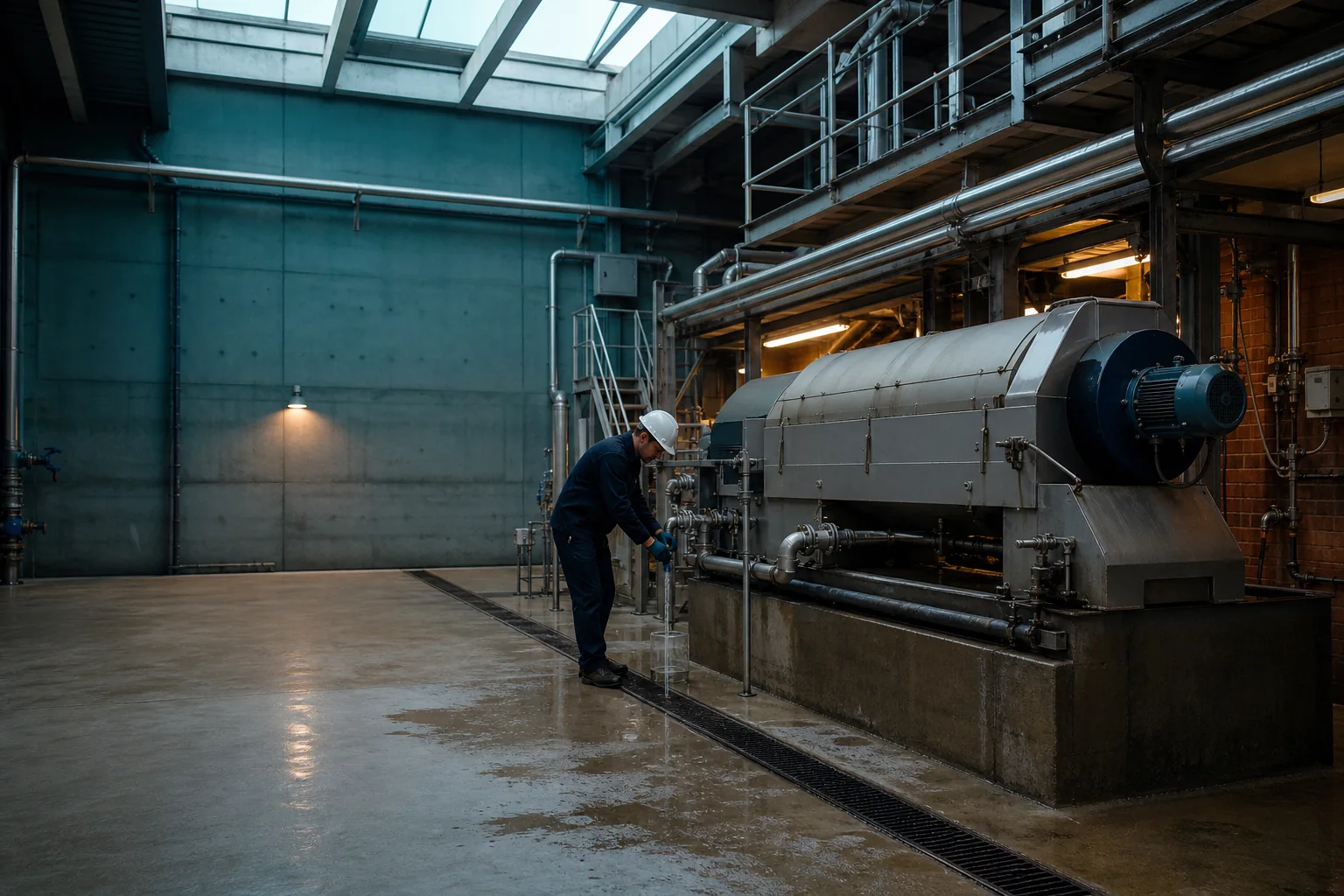
Mobile dewatering equipment can move between feeds that require different polymer candidates. A contractor’s familiar grade is a useful reference, not automatic qualification for every campaign. Purchase planning should connect the site feed, mobile preparation system and clearly assigned technical acceptance.
Define the campaign rather than a universal service grade
Record the sludge origin, storage history, expected solids range and any upstream chemicals at the new location. Identify how the feed will be mixed and supplied to the mobile machine. Different collection points can produce materially different residuals. Provide representative samples before the campaign where possible. A purchasing framework may cover several jobs, but each distinct feed requires evidence that its approved candidate remains suitable.
Check the mobile preparation arrangement
State whether the equipment is configured for powder, emulsion or another specific product form. Confirm the available water, preparation capacity, aging arrangement and dosing range. A delivery selected only by polymer chemistry may be impractical to use if the onboard system is incompatible. Consult the product-form comparison before making a substitution. Include measured pump delivery with the prepared solution when estimating useful dose.
Assign acceptance responsibilities
Agree who records feed data, runs the trial, evaluates capture and cake, and releases the candidate for continued use. Separate a supplier sample recommendation from the contractor’s machine settings and the site’s waste-management requirements. The pilot-to-production review helps document the result. Avoid an ambiguous instruction to use whichever available product appears to form the largest floc.
Quote stock and handling for the campaign
Estimate quantity from expected dry-solids loading and qualified dose, distinguishing planning volume from confirmed demand. Include safe unloading, covered storage and package transfer into the mobile system. Check the supplier-confirmed delivery window rather than assuming emergency stock exists. Keep product and lot markings visible throughout the job. If the feed changes during excavation or tank cleaning, review the candidate instead of extending one initial approval to an unrelated residual.
Evidence needed before purchase
Record the actual observation or document reference against each item. If a condition was not tested, keep it visible as an approval limitation. Purchasing, operations and receiving should use the same candidate identifier so a favourable result is not transferred to a different product or unreviewed delivery.
| Decision | Evidence | Release condition |
|---|---|---|
| Campaign | Feed origin and range by location | Grade is approved for the stated job |
| Mobile system | Product form, water and capacity | Delivered material can be prepared correctly |
| Responsibilities | Trial records and named approval roles | Commercial order follows documented acceptance |
Information to send with the quotation request
Provide campaign duration, residual source, expected dry-solids quantity, mobile machine and preparation configuration. Include water availability, delivery access and package handling constraints. State which organization will approve the trial and whether the feed can change substantially during the campaign.
Include the required quantity, packaging method and destination with the technical evidence. Use the cationic PAM trial and RFQ route for a focused sample review, then confirm documents, packaging and supply scope for the approved product. Gongyi Xinqi Polymer Co., Ltd. can review the application and quotation requirements. Grade suitability, delivery availability and commercial terms need confirmation; no universal dose or guaranteed treatment outcome should be inferred from an application name.
Sample pathway
Send the feed condition and machine target.
A focused sample set starts with representative sludge, active dose, equipment and acceptance data.